Snowflake データ ソース
はじめに
Snowflake は、データ分析、データ共有、ビジネス インテリジェンス ワークロード向けにスケーラブルなストレージとコンピューティング リソースを提供するクラウドベースのデータ ウェアハウス プラットフォームです。このトピックでは、Reveal アプリケーションで Snowflake データ ソースに接続してデータを視覚化および分析する方法について説明します。
サーバー構成
インストール
- ASP.NET
- Node.js
- Java
手順 1 - Reveal Snowflake コネクタ パッケージをインストールします。
ASP.NET アプリケーションの場合、Snowflake サポートを有効にするには、別の NuGet パッケージをインストールする必要があります。
dotnet add package Reveal.Sdk.Data.Snowflake
手順 2 - アプリケーションに Snowflake データ ソースを登録します。
builder.Services.AddControllers().AddReveal( builder =>
{
    builder.DataSources.RegisterSnowflake();
});
Node.js アプリケーションの場合、Snowflake データ ソースはメインの Reveal SDK パッケージに既に含まれています。標準の Reveal SDK セットアップ以外に追加のインストールは必要ありません。
Java アプリケーションの場合、Snowflake データ ソースはメインの Reveal SDK パッケージに既に含まれています。標準の Reveal SDK セットアップ以外に追加のインストールは必要ありません。
接続構成
- ASP.NET
- Java
- Node.js
- Node.js - TS
public class DataSourceProvider : IRVDataSourceProvider
{
    public Task<RVDataSourceItem> ChangeDataSourceItemAsync(IRVUserContext userContext, string dashboardId,
        RVDataSourceItem dataSourceItem)
    {
        if (dataSourceItem is RVSnowflakeDataSourceItem snowflakeDataSourceItem)
        {
            //update underlying data source
            ChangeDataSourceAsync(userContext, snowflakeDataSourceItem.DataSource);

            //only change the table if we have selected our custom data source item
            if (snowflakeDataSourceItem.Id == "MySnowflakeDataSourceItem")
            {
                snowflakeDataSourceItem.Schema = "TPCDS_SF100TCL";
                snowflakeDataSourceItem.Table = "CUSTOMER";
            }
        }

        return Task.FromResult(dataSourceItem);
    }

    public Task<RVDashboardDataSource> ChangeDataSourceAsync(IRVUserContext userContext,
        RVDashboardDataSource dataSource)
    {
        if (dataSource is RVSnowflakeDataSource snowflakeDataSource)
        {
            snowflakeDataSource.Account = "your-account";
            snowflakeDataSource.Host = "your-account-host";
            snowflakeDataSource.Database = "SNOWFLAKE_SAMPLE_DATA";
        }

        return Task.FromResult(dataSource);
    }
}
public class DataSourceProvider implements IRVDataSourceProvider {
    public RVDataSourceItem changeDataSourceItem(IRVUserContext userContext, String dashboardsID, RVDataSourceItem dataSourceItem) {

        if (dataSourceItem instanceof RVSnowflakeDataSourceItem snowflakeDataSourceItem) {

            //update underlying data source
            changeDataSource(userContext, dataSourceItem.getDataSource());

            //only change the table if we have selected our custom data source item
            if (Objects.equals(dataSourceItem.getId(), "MySnowflakeDataSourceItem")) {
                snowflakeDataSourceItem.setSchema("TPCDS_SF100TCL");
                snowflakeDataSourceItem.setTable("CUSTOMER");
            }
        }
        return dataSourceItem;
    }

    public RVDashboardDataSource changeDataSource(IRVUserContext userContext, RVDashboardDataSource dataSource) {

        if (dataSource instanceof RVSnowflakeDataSource snowflakeDataSource) {
            snowflakeDataSource.setAccount("your-account");
            snowflakeDataSource.setHost("your-account-host");
            snowflakeDataSource.setDatabase("SNOWFLAKE_SAMPLE_DATA");
        }
        return dataSource;
    }
}
const dataSourceItemProvider = async (userContext, dataSourceItem) => {
    if (dataSourceItem instanceof reveal.RVSnowflakeDataSourceItem) {

        //update underlying data source
        dataSourceProvider(userContext, dataSourceItem.dataSource);

        //only change the table if we have selected our data source item
        if (dataSourceItem.id === "MySnowflakeDataSourceItem") {
            dataSourceItem.schema = "TPCDS_SF100TCL";
            dataSourceItem.table = "CUSTOMER";
        }
    }
    return dataSourceItem;
}

const dataSourceProvider = async (userContext, dataSource) => {
    if (dataSource instanceof reveal.RVSnowflakeDataSource) {
        dataSource.account = "your-account";
        dataSource.host = "your-account-host";
        dataSource.database = "SNOWFLAKE_SAMPLE_DATA";
    }
    return dataSource;
}
const dataSourceItemProvider = async (userContext: IRVUserContext | null, dataSourceItem: RVDataSourceItem) => {
    if (dataSourceItem instanceof RVSnowflakeDataSourceItem) {

        //update underlying data source
        dataSourceProvider(userContext, dataSourceItem.dataSource);

        //only change the table if we have selected our data source item
        if (dataSourceItem.id === "MySnowflakeDataSourceItem") {
            dataSourceItem.schema = "TPCDS_SF100TCL";
            dataSourceItem.table = "CUSTOMER";
        }
    }
    return dataSourceItem;
}

const dataSourceProvider = async (userContext: IRVUserContext | null, dataSource: RVDashboardDataSource) => {
    if (dataSource instanceof RVSnowflakeDataSource) {
        dataSource.account = "your-account";
        dataSource.host = "your-account-host";
        dataSource.database = "SNOWFLAKE_SAMPLE_DATA";
    }
    return dataSource;
}
ChangeDataSourceAsync メソッドでデータ ソースに加えた変更は、ChangeDataSourceItemAsync メソッドには引き継がれません。両方のメソッドでデータ ソースのプロパティを更新する必要があります。上記の例に示すように、ChangeDataSourceItemAsync メソッド内で、データ ソース項目の基になるデータ ソースをパラメーターとして渡して ChangeDataSourceAsync メソッドを呼び出すことをお勧めします。
認証
Snowflake の認証は、ユーザー名とパスワードの資格情報を使用してサーバー側で処理されます。すべての認証オプションの詳細については、「認証」トピックを参照してください。
- ASP.NET
- Node.js
- Node.js - TS
- Java
public class AuthenticationProvider: IRVAuthenticationProvider
{
    public Task<IRVDataSourceCredential> ResolveCredentialsAsync(IRVUserContext userContext, RVDashboardDataSource dataSource)
    {
        IRVDataSourceCredential userCredential = null;
        if (dataSource is RVSnowflakeDataSource)
        {
            userCredential = new RVUsernamePasswordDataSourceCredential("username", "password");
        }
        return Task.FromResult<IRVDataSourceCredential>(userCredential);
    }
}
const authenticationProvider = async (userContext, dataSource) => {
    if (dataSource instanceof reveal.RVSnowflakeDataSource) {
        return new reveal.RVUsernamePasswordDataSourceCredential("username", "password");
    }
    return null;
}
const authenticationProvider = async (userContext: IRVUserContext | null, dataSource: RVDashboardDataSource) => {
    if (dataSource instanceof RVSnowflakeDataSource) {
        return new RVUsernamePasswordDataSourceCredential("username", "password");
    }
    return null;
}
public class AuthenticationProvider implements IRVAuthenticationProvider {
    @Override
    public IRVDataSourceCredential resolveCredentials(IRVUserContext userContext, RVDashboardDataSource dataSource) {
        if (dataSource instanceof RVSnowflakeDataSource) {
            return new RVUsernamePasswordDataSourceCredential("username", "password");
        }
        return null;
    }
}
クライアント側の実装
データ ソースの作成
手順 1 - RevealView.onDataSourcesRequested イベントのイベント ハンドラーを追加します。
const revealView = new RevealView("#revealView");
revealView.onDataSourcesRequested = (callback) => {
    // Add data source here
    callback(new RevealDataSources([], [], false));
};
手順 2 - RevealView.onDataSourcesRequested イベント ハンドラーで、RVSnowflakeDataSource オブジェクトの新しいインスタンスを作成します。title と subtitle プロパティを設定します。RVSnowflakeDataSource オブジェクトを作成したら、それをデータ ソース コレクションに追加します。
revealView.onDataSourcesRequested = (callback) => {
    const snowflakeDS = new RVSnowflakeDataSource();
    snowflakeDS.title = "Snowflake";
    snowflakeDS.subtitle = "Data Source";

    callback(new RevealDataSources([snowflakeDS], [], false));
};
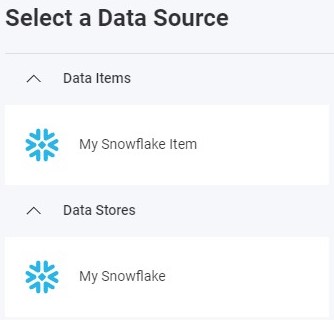
アプリケーションが実行されたら、新しい可視化を作成すると、新しく作成された Snowflake データ ソースが [データ ソースの選択] ダイアログに表示されます。

データ ソース項目の作成
データ ソース項目は、ユーザーが視覚化のために選択できる Snowflake データ ソース内の特定のデータセットを表します。クライアント側では、ID、タイトル、サブタイトルのみを指定する必要があります。
revealView.onDataSourcesRequested = (callback) => {
    // Create the data source
    const snowflakeDS = new RVSnowflakeDataSource();
    snowflakeDS.title = "My Snowflake Datasource";
    snowflakeDS.subtitle = "Snowflake";

    // Create a data source item
    const snowflakeDSI = new RVSnowflakeDataSourceItem(snowflakeDS);
    snowflakeDSI.id = "MySnowflakeDataSourceItem";
    snowflakeDSI.title = "My Snowflake Datasource Item";
    snowflakeDSI.subtitle = "Snowflake";

    callback(new RevealDataSources([snowflakeDS], [snowflakeDSI], false));
};
アプリケーションが実行されたら、新しい可視化を作成すると、新しく作成された Snowflake 項目データ ソースが [データ ソースの選択] ダイアログに表示されます。
その他のリソース
API リファレンス
- ASP.NET
- Node.js
- RVSnowflakeDataSource - Snowflake データ ソースを表します
- RVSnowflakeDataSourceItem - Snowflake データ ソース項目を表します
- RVSnowflakeDataSource - Snowflake データ ソースを表します
- RVSnowflakeDataSourceItem - Snowflake データ ソース項目を表します